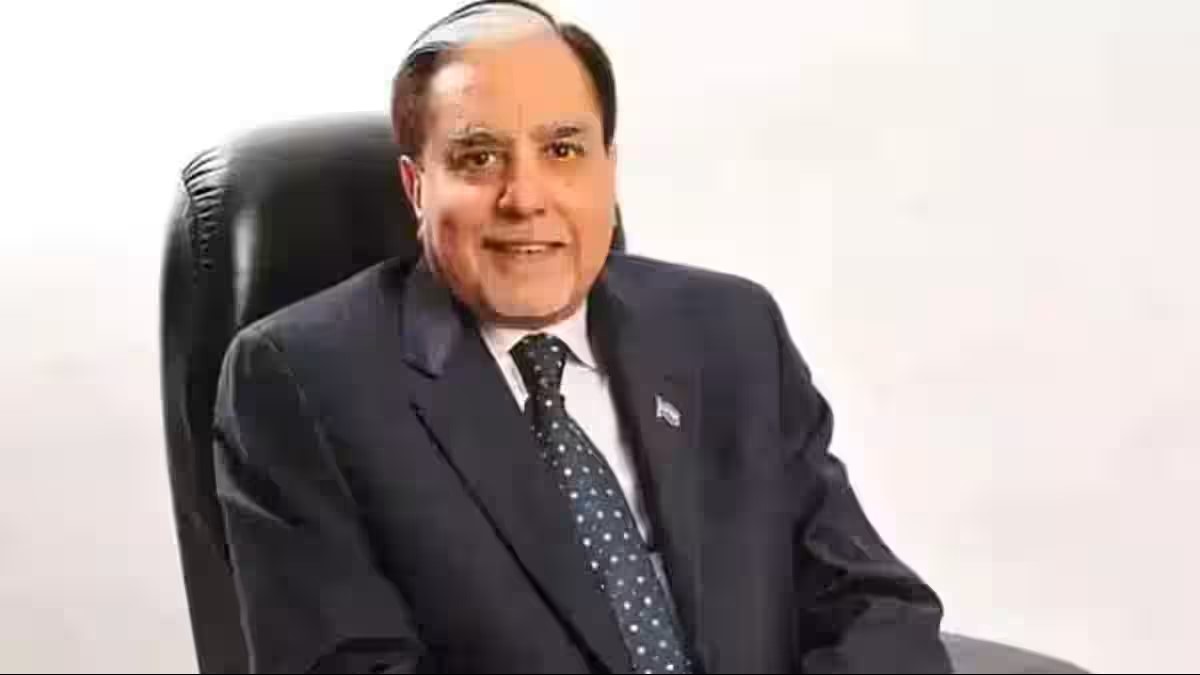
Few stories capture grit, instinct and reinvention the way the journey of Dr Subhash Chandra does. Born in a small town in Haryana and starting his life as a teenage trader in his family’s grain business, Dr Chandra went on to build one of India’s most influential media and entertainment empires. On his birthday today, his story stands not just as a tribute to a pioneering entrepreneur, but as a reminder of how one individual’s vision can change an entire industry.
Dr Chandra’s rise was never linear. It was shaped by early hardships, timely risks, and a sharp eye for sectors waiting to be disrupted. Long before “start-up culture” became a buzzword, he was breaking new ground — in packaging, amusement parks, news broadcasting, satellite television, education and digital platforms. Today, he remains one of India’s most recognisable business architects, rightly regarded as the Father of Indian Television.
Early life: A childhood of responsibilities that built an entrepreneur
Dr Subhash Chandra grew up in Adampur Mandi, Haryana, in a family engaged in traditional trading. When most children his age were thinking about school, he was learning the discipline of running a small business — negotiating prices, understanding supply chains and managing people.
The early exposure shaped his belief that an entrepreneur is not born in a boardroom, but in real-world struggle. Those formative years became the foundation of his risk-taking ability and his confidence to enter industries where no Indian company had ever ventured.
From rice to packaging: The first big leap
Before Dr Chandra transformed entertainment, he first changed the packaging industry. In the 1980s, when India was still dependent on imported laminated tubes used in toothpaste, cosmetics and pharma, Dr Chandra sensed an opportunity. He set up Essel Propack, introducing laminated tubes to the Indian market. The venture grew into one of the world’s largest laminated tube manufacturers and demonstrated what would become his signature style — entering sunrise sectors before anyone else realised their potential.
1992: The moment that changed In Indian television forever
The defining turning point came in 1992. India had just begun liberalising its economy. Television meant only Doordarshan. The idea of a private satellite channel was almost unimaginable. But Dr Subhash Chandra saw a nation ready for change.
He negotiated a transponder on AsiaSat – a bold and expensive decision at a time when foreign broadcasters hesitated to enter India. And on 2 October 1992, Zee TV was launched.
It became the country’s first private satellite channel and the beginning of a media revolution. Within years, Zee grew into a vast network of entertainment, movies, regional channels, music, and news, influencing how millions of Indians consumed content at home. It cracked open a market that would later define modern India’s entertainment landscape.
Building one of India’s most diverse media groups
After Zee TV, Dr Subhash Chandra expanded rapidly across sectors:
Zee News & WION
He believed India should have its own global narrative. Zee News and later WION became platforms where Indian stories, perspectives and diplomacy could be heard globally.
Dish TV & Siti Networks
He pushed the transition from analogue to digital with DTH and cable digitisation, taking modern broadcasting to deep interiors of the country.
Zee Learn & Education Ventures
Through Kidzee, Mount Litera Zee School and Zee Learn, he envisioned education models that could reach middle India, especially Tier-2 and Tier-3 towns.
Essel World & Water Kingdom
Long before organised entertainment became mainstream, Dr Chandra launched India’s first large-scale amusement parks, creating a new leisure culture for urban families.
These ventures cemented his identity as someone who built industries, not just companies.
Leadership style: Risk, resilience and reinvention
Dr Subhash Chandra’s leadership philosophy has always been rooted in three pillars:
1. Think ahead of the market
He entered satellite TV, OTT, packaging and amusement parks years before they became mainstream. His instinct for early disruption remains one of his strongest legacies.
2. Integrity above everything
When the Essel Group faced a debt crisis in recent years, Dr Chandra publicly acknowledged the challenges and worked towards repaying lenders a rare stance in the corporate world.
3. Learn from setbacks
Dr Chandra has often said that failures teach more than success. His ability to adapt, restructure and rebuild continues to inspire a generation of entrepreneurs.
Mentorship and nation-building
Beyond business, Dr Chandra’s focus has remained on nurturing talent and institutions. He established the Subhash Chandra Foundation to support education, entrepreneurship and rural development. His Vipassana practice also shaped his leadership values – discipline, clarity and responsibility.
Through mentorship programmes, his book The Z Factor, and engagements with young founders, Dr Chandra has consistently shared lessons from his own journey, encouraging young Indians to dream boldly and chase possibilities.
A legacy that shaped modern India
From being India’s first media entrepreneur to becoming a global Indian business voice, Dr Chandra’s journey is one of resilience and reinvention. Three decades after Zee TV changed Indian television forever, his story continues to stand as a powerful reminder of how innovation, courage and conviction can redefine a nation’s cultural landscape.