The stock market is incapable of distinguishing between actual and perceived media bias.
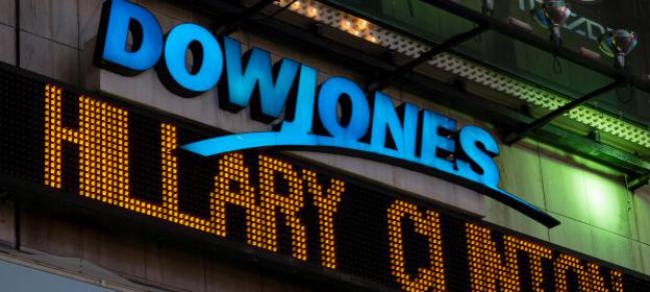
When conservative stalwart Rupert Murdoch purchased Dow Jones Newswires (DJNW) in 2000, investors’ antennae went up – the expectation from Wall Street was that the right-wing tycoon would turn the newswire into a Republican mouthpiece.
Media bias has been visible for years. During the U.S. presidential campaign, cries of bias reached fever pitch. At the ballot box, bias has been well documented but media bias in relation to the stock market has not been publicised to the same degree.
In our paper, “Much Ado About Nothing: Is the Market Affected by Political Bias?”, Mancy Luo, Alberto Manconi and I studied investor reactions to news about politically affiliated stocks by looking at the perceived political bias in a media company resulting from the purchase of DJNW, formerly a family firm, by News Corporation.
Despite the concerns that emerged at the time of the purchase, we found that the market managed to discount the potential political bias. Using data based on DJNW, data on firm political affiliation from the Federal Election Commission and trading data in Ancerno to look at patterns of short-term and long-term investors, we find that after the acquisition, the market actually underreacted to good news on firms affiliated with the Republican Party. Therefore, they “debiased” the news.
The market wasn’t as responsive when negative news was published about stocks with Democratic leanings as those from companies which supported the Republican Party. In fact, when there was negative news about Democratically-aligned companies coming out of DJNW, investors ignored it, assuming political bias.
Tracking news and deals
We looked at different types of investors – long-term, politically affiliated, and informed. Perceived bias mostly affects short-term investors.
We call the trend away from trusting bad news from DJNW for Democrats, the “sterilisation effect”. The sterilisation effect is the perceived DJNW bias toward Republican stocks so the sensitivity of Republican stock prices to DJNW news decreased after the News Corp. acquisition. The sensitivity of investors trading on news sentiment dropped 92 percent for Republican stocks. The “sterilisation effect” is stronger for stocks traded by long-term investors and those traded by Democrats.
Yet following the takeover, the market reacted less to the sentiment content in DJNW, and this effect was stronger if the stock had a Republican orientation. After the acquisition, there was a 73 percent drop in the sensitivity to a DJNW sentiment to a Republican firm. For a Democratic firm, the drop was 29 percent post-sale.
Bias is in the eye of the beholder
The market does not seem capable of distinguishing between real and perceived bias.Real bias is actually traceable but perceived bias is imagined on the part of the reader. In our study, investors had a tendency to compensate for any positive news about companies aligned with the GOP. They thought that the newly conservative DJNW was exaggerating. It wasn’t. We found that there wasn’t any meaningful change in coverage of stocks, regardless of political party, in the DJNW after the sale to News Corp.
Most importantly, we found that DJNW has never been biased, neither before the sale to News Corp. nor after. In this case, the market created a fictitious, non-existent bias because it was trying to react to political behaviour. The day Donald Trump won the U.S. presidential election, there was a very big swing in volatility. This was similar to what we found: the market tries to apply a sort of political paradigm and, most of the time, gets it wrong in the short run. This leaves space for informed investors, like hedge fund managers, to take advantage by selling short when unsophisticated retail investors are relying on an imagined bias for their information.
Written by Massimo Massa, INSEAD Professor of Finance